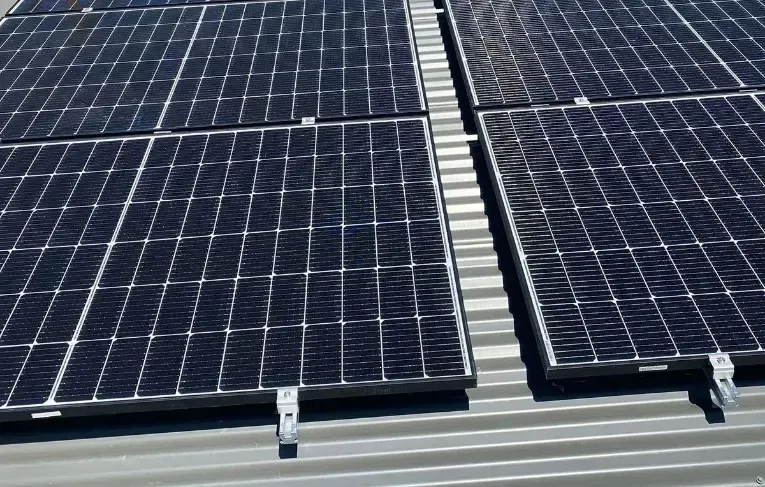
What Size Solar Batteries Do Wagga Wagga Homes Need After the 2026 Rebate Changes?

Des Mullins Electrical & Solar • November 5, 2026

The bigger battery looks tempting, especially when the quote highlights a larger discount. But the right size depends on your evening usage, available solar surplus and future plans, not the rebate ceiling. Extra storage only earns its place when you have a practical use for it.


At Des Mullins Electrical & Solar, we help homeowners assess solar batteries in Wagga Wagga against their household needs. Since the May 2026 changes, understanding which capacity you'll actually use matters when comparing quotes.

Why “Go as Big as the Rebate Allows” No Longer Works

The Cheaper Home Batteries Program supports eligible systems, but eligibility isn't a sizing recommendation. A battery can qualify for assistance while still being poorly matched to your solar generation or household demand. DCCEEW specifically warns that oversizing relative to solar or inverter capacity can limit benefits.


The government's aim is to maintain a discount of around 30% across a range of battery sizes. That isn't a guaranteed percentage off every quote or a reason to buy unused capacity. Compare the final installed price with the energy benefits expected at your home.

How the Battery Discount Is Tiered Since 1 May 2026

Support now tapers across bands of usable capacity, according to the Clean Energy Regulator. The STC factor applies as follows:


  • First 14 kWh: 100% of the applicable factor
  • Above 14 kWh up to 28 kWh: 60% for each additional kWh
  • Above 28 kWh up to 50 kWh: 15% for each additional kWh


These are marginal tiers. Moving above 14 kWh doesn't reduce support on the first 14 kWh, and 60% refers to the STC factor, not a 60% price discount. For installations from May to December 2026, the factor is 6.8. A hypothetical 14 kWh usable battery therefore gives 14 × 6.8 = 95.2, or 95 certificates after rounding down. Larger systems need the tiered calculation.


The revised schedule introduces six-monthly reductions and a steeper planned decline than the previous annual approach. The installation and certification timing matters, so confirm the applicable factor rather than relying on the quote date. Eligibility remains 5–100 kWh nominal capacity, with STCs limited to the first 50 kWh of usable capacity. Nominal capacity is the nameplate total; usable capacity is the energy available to discharge.


Use the CER's Solar Battery STC Calculator, selecting the battery option, to check certificate estimates. It calculates STCs; it isn't a solar battery size calculator and doesn't assess household demand. The calculator's results remain subject to eligibility and its published limitations.

What Size Solar Battery Do I Need? Start With Your Power Bill

Start with how much electricity you use when solar isn't meeting demand. Gather bills across seasons, then request interval consumption data from your retailer if available. A daily average alone doesn't show whether electricity is used at lunchtime or after sunset.


For an existing solar home, distinguish grid imports from total household consumption. Solar monitoring can help show generation, household use and exports together. Our guide to how the mySigen app helps you maximise solar savings explains the monitoring features available with a compatible system.


Look at evening usage, overnight appliances and early-morning demand before solar production rises. Ask the installer to account for energy losses and any capacity reserved for backup, rather than matching a headline battery number directly to your consumption.

How Many kWh Battery Do I Need for a 3 Bedroom House?

Bedroom count doesn't establish battery size. Two three-bedroom homes can have different occupancy, cooking equipment, hot water and cooling habits, so they need separate assessments.


For a hypothetical example, one household measures 8 kWh of evening and overnight demand and regularly exports 12 kWh during the day. A system around 10 kWh usable capacity could be a starting point for comparison, allowing assessment of losses and reserve settings. Those invented figures aren't a Wagga average or an installation recommendation.


Another household using substantially more after sunset may justify more storage. The useful question is how many kWh the battery can regularly store and deliver for your needs, not how many bedrooms appear on the floor plan.

How Your Existing Solar Array Caps a Useful Battery Size

Your daytime surplus sets a practical limit on how much solar energy you can store. If appliances already consume most generation, a larger battery doesn't create extra solar electricity. Review actual exports, seasonal production and inverter charging limits before selecting capacity.


Panel capacity in kW isn't a daily energy yield in kWh. Ask for modelling that reflects the array's orientation, shading and output across the year, rather than one clear summer day.


Grid charging may change the calculation where the equipment, tariff and operating plan permit it. Have that strategy modelled explicitly, including purchased electricity costs; don't count grid-charged energy as free solar.

Planning for Air Conditioning Through a Riverina Summer

For a home battery in Wagga Wagga, consider when cooling runs and how much electricity it draws. Daytime cooling may use solar directly, while evening cooling draws on stored energy or the grid.


As a hypothetical calculation, an air conditioner averaging 2 kW of electrical input for four hours uses 8 kWh. That is an assumed consumption example, not its advertised cooling capacity or a local usage statistic. Other appliances add to the demand.


Check battery power output as well as energy capacity. The kWh figure describes stored energy; the kW rating limits simultaneous output. Ask whether the proposed battery and inverter can supply your planned combination of cooling, cooking and other loads.

Is a Bigger Battery Worth It With the Rebate?

A bigger battery is worth considering when the additional capacity has a measurable purpose. That might be regular overnight demand, a planned electric appliance upgrade or a specific backup objective. Ask for a comparison showing what the extra capacity changes.


Compare smaller and larger options using installed cost, expected energy shifted, tariff assumptions and warranty terms. The reduced support on upper tiers makes this comparison particularly useful. Avoid treating a larger certificate total as proof of a better investment.


A separate NSW incentive may apply when an eligible battery joins a virtual power plant. The previous NSW battery installation incentive cannot be combined with the federal program. Visit our government battery rebates page and confirm current eligibility before including incentives in your budget.

Starting Smaller and Adding Capacity Later

Expandable equipment can offer flexibility, but later additions need compatibility and approval checks. We offer Sigenergy battery systems, including modular options, and can discuss expansion requirements for the proposed configuration.


However, don't budget on receiving another federal discount later. CER guidance says only one battery system per premises is eligible for STCs, with additional batteries ineligible after the first claim. Expansion support is subject to specific rules where the existing system hasn't previously claimed.


Ask about module availability, installation costs and warranty conditions before choosing a staged approach. Buying today's useful capacity with a documented expansion plan is different from assuming future additions will be cheap or subsidised.

Questions to Ask Before You Sign a Battery Quote

A useful quote explains why the proposed size suits your home. Ask these questions before committing:


  • What consumption and solar data support this capacity?
  • Are the figures nominal capacity or usable capacity?
  • How do losses, backup reserve and seasonal changes affect delivery?
  • What are the charging and discharge power limits?
  • Which installation date and STC factor underpin the discount?
  • What changes if we choose a smaller system?


The takeaway is to size the battery around energy you can store and use, then assess the rebate. Contact Des Mullins Electrical & Solar with your bills, solar details and future appliance plans to request a battery assessment and quote. We service properties across Wagga Wagga.

Frequently Asked Questions

  • Will a battery work during blackouts?

    Only if the system supports backup and is installed accordingly. Confirm which circuits it can supply and the limits during an outage.

  • Must I join a VPP?

    Federal eligibility requires grid-connected systems to be technically VPP-capable. That doesn't itself require you to sign a VPP contract; check participation conditions separately.

  • Can I put the battery anywhere?

    No, installation locations must meet safety requirements. Have the installer assess the proposed position rather than choosing solely for appearance or convenience.

  • Will I still have an electricity bill?

    A battery doesn't guarantee a zero bill. Grid purchases, tariff arrangements and ongoing supply charges can remain, so ask for realistic modelling.

Solar Panels for Smarter Wagga Rental Investments
By Des Mullins Electrical & Solar • September 17, 2026
Thinking about solar for your rental property? Discover how it can boost value, attract tenants, and cut running costs for landlords in Wagga.
White Solar Power System in Wagga Wagga
By Des Mullins Electrical & Solar • August 14, 2026
Discover where energy loss happens in solar power systems and how to fix it. Discover expert tips from Des Mullins Electrical & Solar in Wagga Wagga.
Electrician In Wagga
By Des Mullins Electrical & Solar • July 22, 2026
Spot the signs you need an Electrician In Wagga for solar repairs before issues worsen. Learn more and book expert help today.
Close-up of a Safety Switches in Wagga
By Des Mullins Electrical & Solar • July 10, 2026
Safety switches protect your Wagga Wagga home from electric shock. Learn how they work, why they're essential, and when to upgrade yours.
Top 10 reasons to call a local electrician
By Des Mullins Electrical & Solar • February 5, 2026
Learn how hiring a local electrician in Wagga Wagga boosts home safety, ensures compliance and improves efficiency this year.
Why you should always hire a licensed electrician
By Des Mullins Electrical Client • October 28, 2025
Hire a licensed electrician to ensure safety and quality workmanship. Discover why professional expertise matters—read the full blog now.
How the mySigen app helps you maximise solar savings
By Des Mullins Electrical & Solar • September 25, 2025
Maximise your solar savings with smart energy control. Des Mullins Electrical & Solar shows how the mySigen app helps Wagga homes—download today!
Benefits of installing a home EV charger
By Des Mullins Electrical & Solar • August 22, 2025
Boost your home’s efficiency with EV charging Wagga Wagga backed by Solar Wagga Wagga expertise. Drive smarter and enquire today.
Electrical inspections for commercial buildings
By Des Mullins Electrical & Solar • August 1, 2025
Is your commercial property electrically safe? Learn how routine inspections reduce risks, cut costs, and support efficiency. Discover what to check—read now!
Electrical inspections for your home
By Des Mullins Electrical & Solar • July 17, 2025
Protect your home and family with regular electrical inspections. Prevent hazards, ensure efficiency, and stay compliant with safety regulations.
Show More